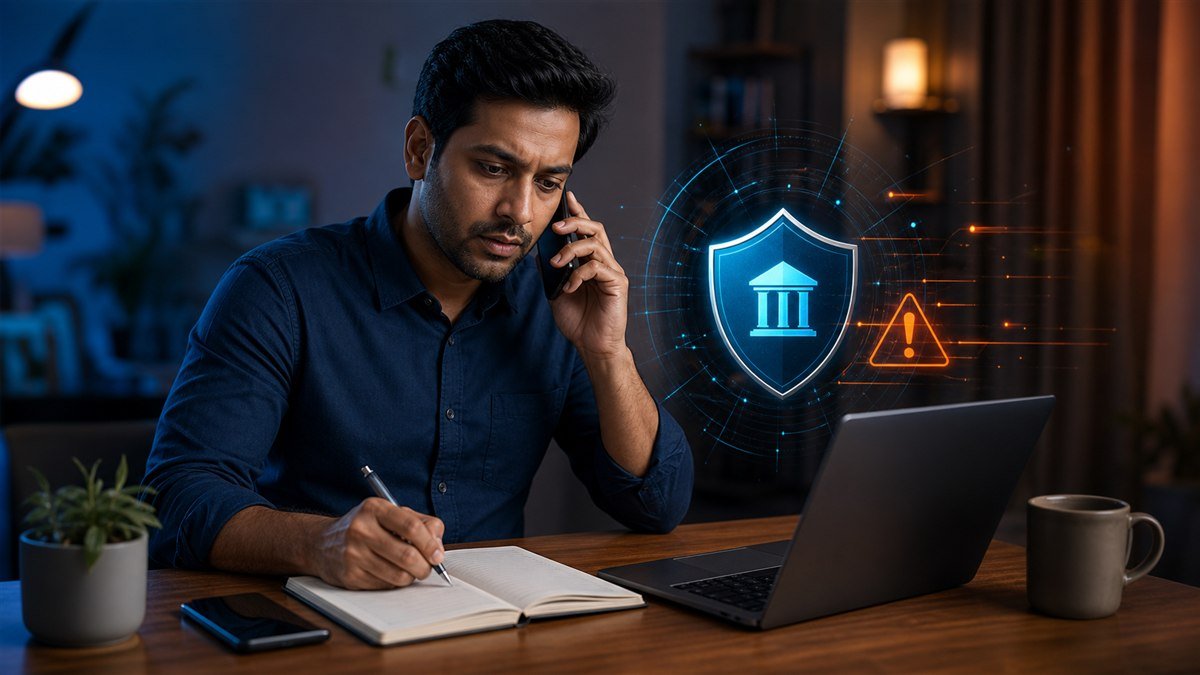
The minutes after an unauthorised payment matter. Stop further access, report through official channels and preserve evidence before trying to argue with the scammer.
A payment scam creates urgency twice: first when the criminal pressures the victim, and again when the victim realises money may be gone. The second period needs a calm sequence. Randomly deleting apps, confronting the caller or posting account details publicly can waste time and destroy useful evidence.
For a digital payment scam India response, begin with the bank or payment provider using a contact route you open independently. Liability and recovery depend on facts, timing and the provider’s process, so prompt reporting and accurate records are essential.
Why digital payment scam India needs a practical framework
End contact and secure the channel
Stop responding to the caller or message. Do not send a second payment to “unlock” a refund. If screen-sharing or remote-access software was installed, disconnect the device from the internet and use a different trusted device to contact the bank.
Do not erase the phone immediately. Preserve messages, phone numbers, transaction references, QR codes, links and the timeline. These records can support the bank’s investigation and an official complaint.
Report the transaction immediately
Use the bank’s official app, website, card number or branch contact—not a number supplied by the suspected scammer. Ask to block the affected payment instrument or account access as appropriate and obtain a complaint or acknowledgement number.
Describe what happened precisely: whether credentials were shared, a collect request was approved, a card transaction appeared without permission or remote access occurred. Do not minimise or guess; the sequence helps the provider classify the case.
Protect email, phone and linked accounts
From a clean device, change the password of the email account that controls banking recovery, then the affected financial account and other reused passwords. Review recent logins, beneficiaries, devices and forwarding rules.
Contact the mobile provider if the SIM unexpectedly stopped working or a SIM-swap is suspected. Remove unknown remote-access tools only after preserving evidence, and update the operating system and security software.
Use official reporting routes
Follow the bank’s grievance process and India’s current official cybercrime reporting channel. Provide the transaction ID, date, amount, account details requested through the legitimate process and evidence files. Keep copies of every acknowledgement.
Beware of “recovery agents” who promise guaranteed refunds for an advance fee. A second scam often targets people whose contact details or complaint posts reveal that they recently lost money.
Review liability and escalation carefully
RBI’s customer-protection framework links certain outcomes to the cause of the unauthorised transaction and how quickly the customer reports it. Specific liability is fact-dependent; do not assume that every scam automatically qualifies for a refund.
If the initial response is unresolved, use the bank’s escalation and ombudsman information as applicable. Keep communication factual, dated and tied to complaint numbers rather than repeatedly opening disconnected complaints.
Quick action checklist
- Stop contact and do not pay a promised recovery fee.
- Call the bank through an independently verified channel.
- Block affected access and obtain an acknowledgement number.
- Preserve transaction IDs, messages, numbers and screenshots.
- Secure email, SIM and linked accounts from a clean device.
A five-step implementation plan
- Step 1: In the first minutes, contact the bank and block the affected route.
- Step 2: Write a chronological incident note while details are fresh.
- Step 3: Secure the controlling email account, banking login and mobile number.
- Step 4: Submit the official cybercrime and bank grievance reports with evidence.
- Step 5: Review statements and credit information later for secondary misuse.
Build the wider digital-life skill set
This guide is part of an India-focused technology cluster. Continue with UPI and digital-payment security guide, family cybersecurity plan, personal budget system, then connect the subject to emergency fund planning guide and guide to manipulative app design. Visit the Techsslaash finance and payment guides for the latest reporting across technology, health, finance, education, entertainment, gaming, lifestyle and travel.
Frequently asked questions
Should I call the number in the suspicious message?
No. Open the bank’s official app or website, use the number printed on the card or visit a branch. The message may route you back to the scammer.
Will the bank always refund an unauthorised transaction?
Not automatically. Outcome depends on how the transaction occurred, applicable rules, evidence and reporting time. Report immediately and follow the formal grievance process.
Should I delete remote-access apps immediately?
First disconnect the device and preserve evidence. Use a clean device to secure accounts and contact the bank, then remove the software and assess the device safely.
Final takeaway
Fast reporting cannot guarantee recovery, but delay can make the situation harder. Use official channels, preserve the timeline and secure the accounts that control recovery. This guide is general information and does not replace the bank’s instructions or legal advice.
Found this useful? Explore more practical reporting from the Finance desk.
Browse Finance