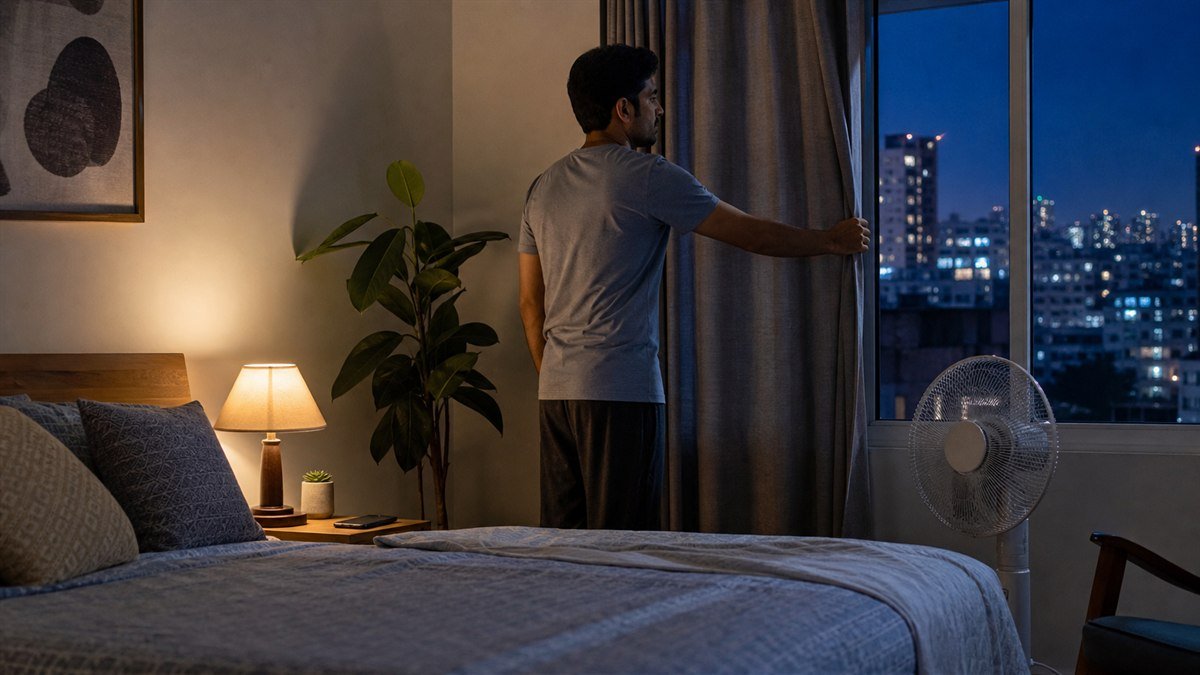
Improve sleep despite heat, noise, long commutes and screen-heavy routines with a practical science-based approach.
Sleep advice often assumes a quiet room, predictable schedule and complete control over temperature. Many Indian city residents instead manage traffic noise, shared homes, hot nights, early commutes and late digital work. This guide explains a practical framework for Indian readers and highlights the decisions that deserve more attention than a headline or product promise.
The intended outcome is to improve sleep opportunity and recovery through realistic environmental and behavioural changes. The recommendations are educational and should be adjusted for personal health, financial circumstances, institutional rules, local conditions and professional advice where appropriate.
Why better sleep Indian cities needs a practical framework
A step-by-step approach
1. Anchor the sleep schedule
Keep wake time within a reasonably consistent window and adjust bedtime gradually rather than chasing a perfect night. This step should be tested against the reader’s real schedule, budget and responsibilities rather than an idealised scenario. Record what changes, what remains difficult and which part produces the greatest benefit.
2. Lower light and stimulation
Use warmer, dimmer light and create a boundary between demanding work and the intended sleep period. This step should be tested against the reader’s real schedule, budget and responsibilities rather than an idealised scenario. Record what changes, what remains difficult and which part produces the greatest benefit.
3. Manage heat and airflow
Choose breathable bedding, ventilation and safe cooling strategies appropriate to the local climate and household. This step should be tested against the reader’s real schedule, budget and responsibilities rather than an idealised scenario. Record what changes, what remains difficult and which part produces the greatest benefit.
4. Reduce disruptive noise
Use predictable background sound, soft furnishings or ear protection when safe and comfortable. This step should be tested against the reader’s real schedule, budget and responsibilities rather than an idealised scenario. Record what changes, what remains difficult and which part produces the greatest benefit.
5. Know when tiredness needs evaluation
Persistent snoring, breathing pauses, severe insomnia or daytime sleepiness deserves qualified medical assessment. This step should be tested against the reader’s real schedule, budget and responsibilities rather than an idealised scenario. Record what changes, what remains difficult and which part produces the greatest benefit.
India-specific questions to ask before acting
Common mistakes to avoid
- Using alcohol as a sleep tool. Pause and identify the assumption behind this choice before spending more time or money.
- Spending extra hours in bed while wide awake. Pause and identify the assumption behind this choice before spending more time or money.
- Checking the time repeatedly during the night. Pause and identify the assumption behind this choice before spending more time or money.
- Ignoring persistent symptoms that affect safety. Pause and identify the assumption behind this choice before spending more time or money.
A seven-day action plan
- Day one: write the outcome and list the constraints that cannot be ignored.
- Day two: collect information from primary, official or accountable sources.
- Day three: compare no more than three realistic options using the same criteria.
- Day four: test the smallest safe version of the first step.
- Day five: note cost, time, friction and any unexpected concern.
- Day six: discuss the choice with a trusted person or qualified professional when the risk is meaningful.
- Day seven: keep, change or stop the plan based on evidence rather than sunk cost.
Continue reading on Techsslaasha
For a deeper view of this subject, read Evidence-Based Morning Routine for Busy Indians and How to Read Fitness Tracker Data Without Anxiety. A related perspective appears in A Sustainable Study System for Competitive Exams Without Burnout, connecting this decision with another part of modern life in India.
Frequently asked questions
How much sleep do adults need?
Many adults function best around seven to nine hours, although individual needs and circumstances vary. Readers should confirm time-sensitive requirements with qualified or official sources before acting.
Does screen light alone cause poor sleep?
Light can delay sleep, but stimulating content, work stress and irregular timing may be equally important. Readers should confirm time-sensitive requirements with qualified or official sources before acting.
When should someone consult a doctor?
Seek help when sleep problems persist, impair daily function or include breathing pauses, severe restlessness or dangerous sleepiness. Readers should confirm time-sensitive requirements with qualified or official sources before acting.
Final takeaway
Better Sleep in Indian Cities: A Practical Science-Based Guide becomes easier when the reader stops looking for a universal answer and starts using a transparent process. Define the need, compare realistic options, protect against the most important risk and review the result after real experience.
Found this useful? Explore more practical reporting from the Health desk.
Browse Health